Putting your voice back in
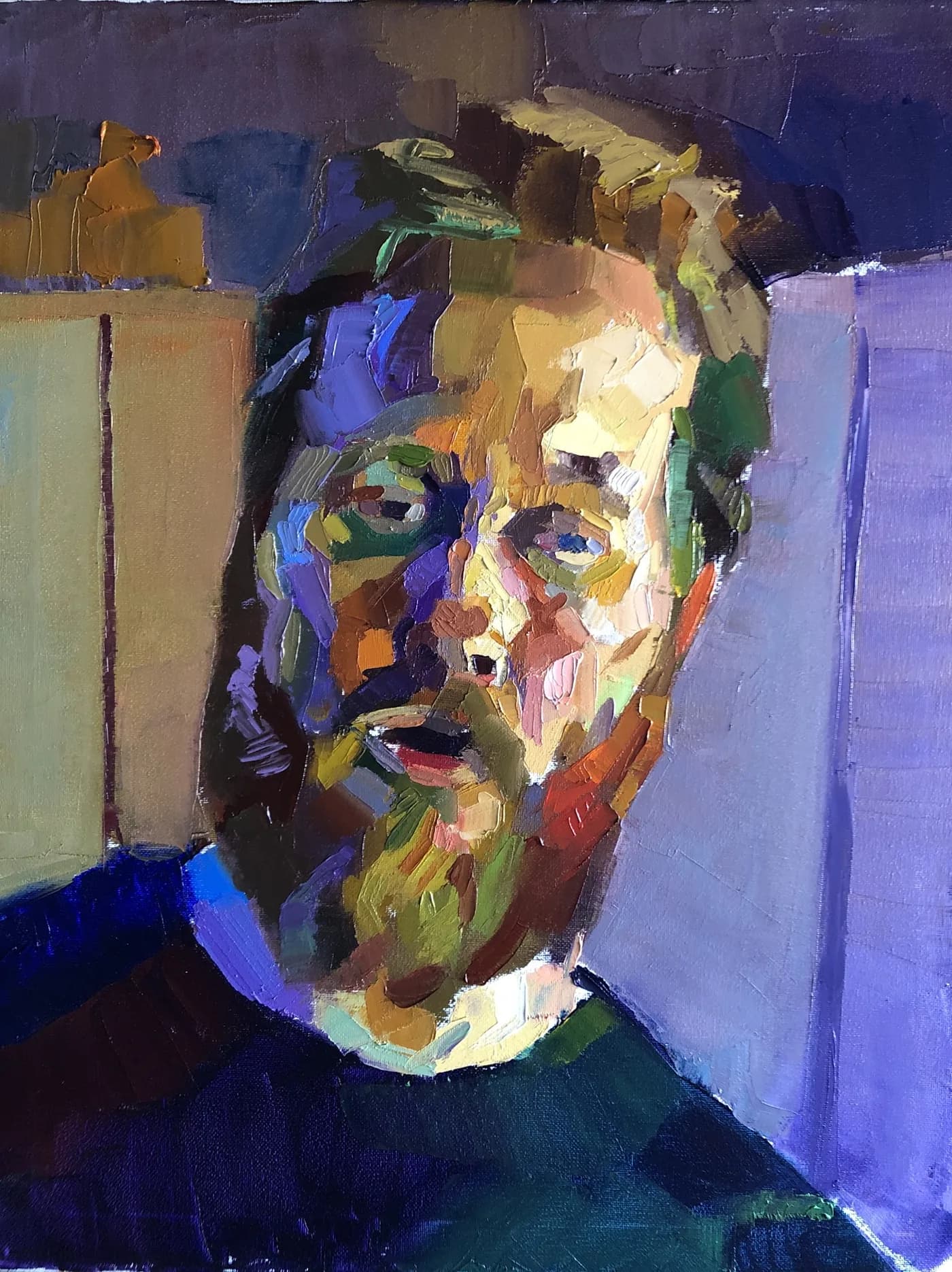
The objection comes up in nearly every first conversation, usually phrased apologetically: will this make me paint like everybody else?
It deserves a straight answer rather than a reassuring one, because the risk is real. Everybody who has spent time in this tradition has met the student whose work became technically accomplished and completely anonymous. It is a known failure mode, not a misunderstanding by outsiders.
How it actually happens
Not through malice, and not usually through the teaching. It happens through attention.
Learning to render accurately consumes an enormous amount of a student's attention for a long time. While that is true, there is very little left over for deciding anything — what to leave out, what to exaggerate, where to let an edge go soft because the picture is better for it. So students stop making those decisions, and after two years of not making them, some of them forget that the decisions exist.
The work ends up correct and silent.
Why the year has three parts
The Conservatory is built in three acts, and the third one exists precisely for this.
The first is seeing — measuring, comparing, learning to trust the eye. The second is the language: anatomy, structure, perspective, the vocabulary that lets you say a thing about a form rather than merely copy it.
The third is the one people do not expect from an atelier. It is deliberately about your voice: what you actually want to make, and using the control you now have to make it. Lisa's phrase for it is that academic training often takes the student's voice out, and the last stretch of our year is putting it back in.
Control is what makes choice possible
Here is the part that sounds like a paradox and is not.
You cannot decide to simplify a hand until you can draw one. Before that, a simplified hand and a badly drawn hand are the same picture, and only you know which you meant. The same is true of every expressive decision — a lost edge, a pushed color, a distortion — every one of them reads as intention only when the alternative was clearly available to you.
Style, in other words, is what is left after you subtract the things you could not help. Training does not remove your voice. It removes your excuses, and then you find out what you actually have to say.
What we are not claiming
That everyone who finishes a year here will have a distinctive body of work. Some people need a decade. Some discover that what they wanted was the craft itself, which is a perfectly good outcome and more common than you would think.
What we will claim is that nobody leaves less able to make a picture than they arrived, and that the fear — this will flatten me — is worth taking seriously enough to build a year around, which is what we have done.
Keep reading
Why we draw from plaster before we draw from people
A plaster cast will hold a pose for six weeks without breathing, shifting its weight, or getting a haircut. That is the entire argument, and it is a good one.
What an atelier actually is, and why the universities stopped teaching this
The word means workshop. In practice it means a dozen people, one room, a model, and a teacher correcting your drawing over your shoulder — which is how painting was taught for four hundred years, and then abruptly wasn't.