Why we draw from plaster before we draw from people
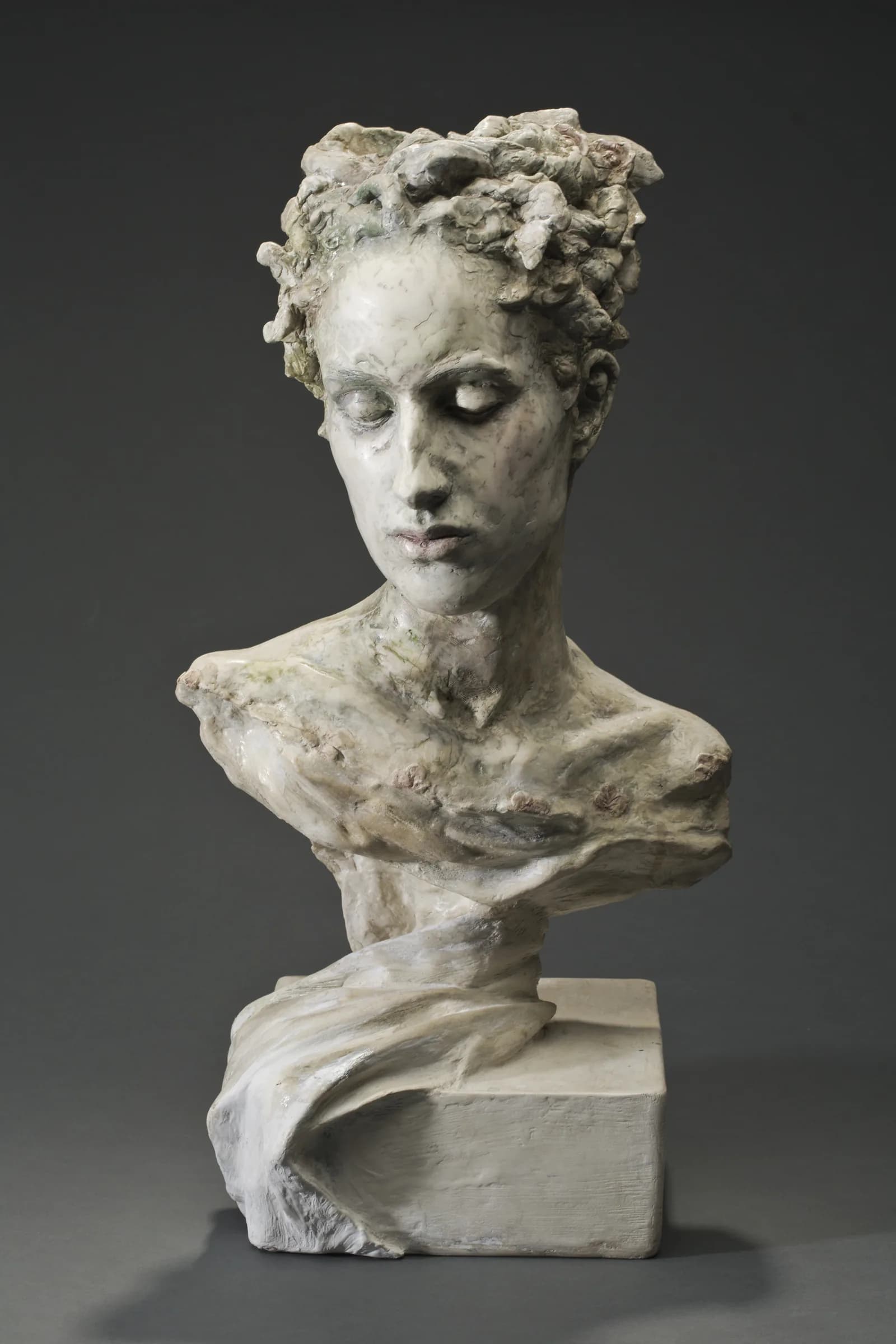
New students are sometimes disappointed to find themselves drawing a lump of white plaster when they came to draw people. It looks like a hazing ritual — the art-school equivalent of scales.
It is not. It is a difficulty curve, carefully graded, and each thing the cast removes is a variable you would otherwise be trying to solve simultaneously.
What the cast takes away
It does not move. A living model breathes, shifts weight, and settles differently after every break. That is a skill you will need, but needing it on day one means you are learning to draw and learning to work fast at the same time. A cast will hold a pose for six weeks.
It does not change its light. Set a single lamp and the shadow shapes are identical every session. You can spend a fortnight understanding one form turning through light into shadow, which you cannot do if the sun moves.
It has no color. White plaster reduces everything to value — how light or dark, and nothing else. Color is a whole separate problem, and mixing it into the first one is how people end up unable to solve either.
It has no likeness. Nobody is waiting to see whether it looks like their mother. You are freed from the one thing that makes beginners tighten up.
What is left is the actual problem
Once movement, changing light, color and likeness are gone, what remains is the thing being taught: where is this edge, how dark is that shadow, how do the two compare.
That is the whole of observational drawing, and it is difficult enough on its own.
Then the plaster starts fighting back
Cast drawing is not easy — it is simply singly difficult. Subtle turns of form in a white object are unforgiving. There is nowhere to hide a wrong value, because there is no interesting color to distract the eye, and no charm in the subject to carry a weak drawing.
People who arrive impatient with the plaster usually make peace with it around the point they realize they cannot yet draw it.
And then people
The living model arrives once the seeing is reliable enough to survive a subject that will not cooperate. Drawing and sculpting from life is the center of this discipline and it is where the year is going — but arriving there able to measure, compare and judge a value is the difference between a productive three-hour pose and a frustrating one.
The plaster is not the point. It is how you get to the point without learning four things at once.
Keep reading
Sight-Size: the oldest trick in the atelier
You set the drawing beside the subject, step back, and compare the two from the same distance. That is the whole method — and it is the fastest way to find out that you have been drawing your assumptions.
Six months in, your eye changes before your hand does
Nobody arrives expecting the change to happen outside the studio. Six months in, the thing people describe is not better drawings — it is that shadows have edges and a white wall has four colors.