Setting up a studio in a room you already live in
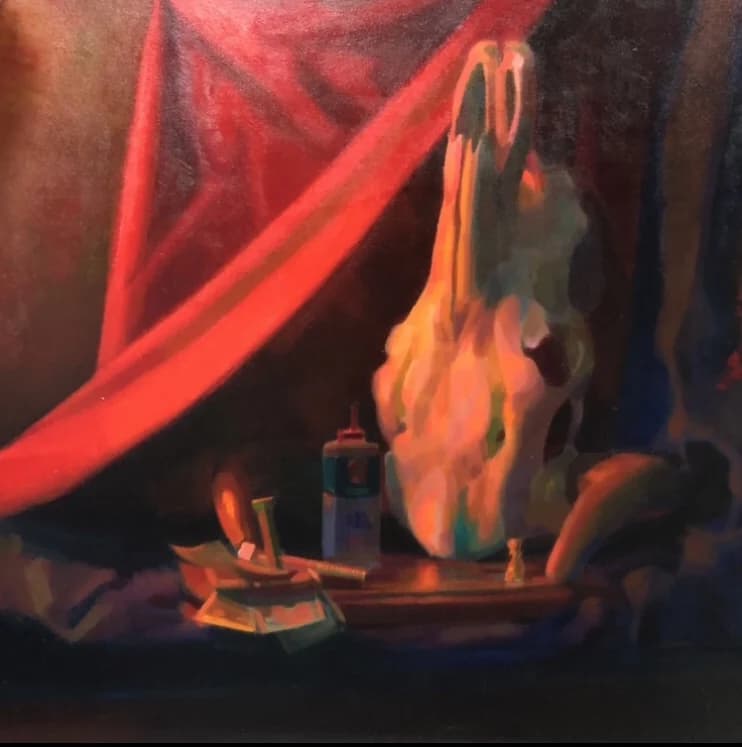
Conservatory students are in the studio two days a week. The other three or four days happen wherever they live — and honestly, most of the hours that change a drawing happen there rather than in class.
So the corner you set up is not a minor detail. Here is the order we suggest doing it in, which matters more than the budget.
1. Light, before anything else
One consistent light source, and the ability to keep everything else off.
A north-facing window is the traditional answer because its light barely changes through the day. Most people do not have one, and a single lamp with a plain bulb, positioned above and to one side of your subject, works perfectly well — with the considerable advantage that it works at night, which is when you will actually be drawing.
What does not work is a room lit by three different sources at three different color temperatures. Every shadow gets a competing second shadow and none of the edges make sense.
2. Somewhere to step back to
This is the one people forget, and it is the one that quietly ruins the setup.
If you are working sight-size, you need to be able to get six or eight feet back from your drawing and see it beside the subject from a fixed spot. A desk shoved against a wall in a small room makes that impossible, and you will end up judging everything from a foot away — which is not the view anyone will ever have of the finished drawing.
Clear a path before you buy anything.
3. An easel, eventually
A drawing board propped at an angle is fine for a long time. An easel becomes worth it when you want the work vertical and at a fixed height, which matters more for painting than for early drawing.
If you buy one, buy a heavy one. Light easels wobble, and a wobbling drawing surface is a permanent small tax on everything you do.
4. Somewhere to put the work down
Unglamorous and genuinely important. Drawings that live on the floor get stepped on; drawings rolled in a tube get forgotten. A flat portfolio and a drawer beats both.
What not to buy yet
Not a full set of anything. Charcoal, a couple of pencils, decent paper, a kneaded eraser and a plumb line will carry you through months. The most common beginner purchase is an expensive kit of forty things, thirty-five of which stay in the box while the same three get used to death.
Buy the three. Replace them often. That is a better studio than most of what gets photographed.
Keep reading
Sight-Size: the oldest trick in the atelier
You set the drawing beside the subject, step back, and compare the two from the same distance. That is the whole method — and it is the fastest way to find out that you have been drawing your assumptions.
Six months in, your eye changes before your hand does
Nobody arrives expecting the change to happen outside the studio. Six months in, the thing people describe is not better drawings — it is that shadows have edges and a white wall has four colors.